Driveway Access, Slope, and Site Work on a Mountain Lot
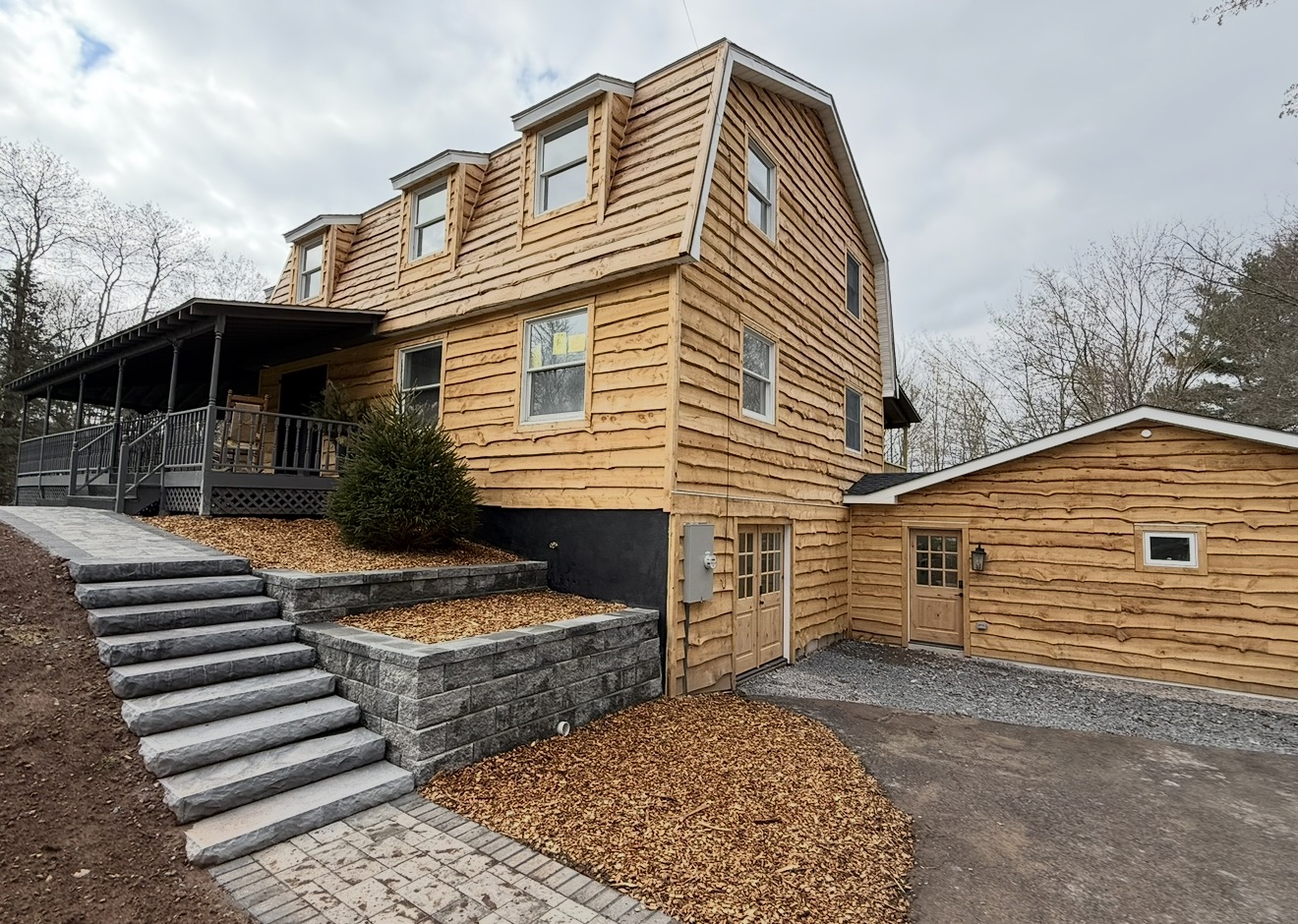
Building in the Pocono Mountains of northeastern Pennsylvania often means working with dramatic, scenic topography. While sloped acreage offers natural character and scenic vantage points, building on an incline requires careful planning before ground is broken. Readers frequently ask: What site conditions change the cost of building on a slope?
Several interconnected variables dictate the budget and feasibility when preparing a sloped parcel: the steepness of the terrain, total driveway length and grade, the presence of subsurface bedrock, soil stability, retaining wall requirements, and stormwater management rules. Understanding these factors early in our building process helps prevent unexpected expenses during initial excavation.
Driveway Grade and Safe Winter Access
Driveway layout is one of the most critical elements when designing a mountain home. While a steep hillside may seem manageable on a dry summer day, northeastern Pennsylvania brings icy winters, freeze-thaw cycles, and heavy precipitation. Travel depends on starting point, route, traffic, and weather, and local driveways must be engineered for reliable seasonal access.
Key considerations for mountain driveway planning include:
- Maximum Slope Thresholds: Many municipalities and emergency service districts set maximum grade limits (frequently between 10% and 15%) to ensure fire apparatus, utility trucks, and delivery vehicles can safely reach the home.
- Switchbacks and Cut-and-Fill: Traversing a steep rise usually requires curves or switchbacks rather than a straight climb. This significantly lengthens the driveway, requiring additional stone subbase, top dressing, and clearing.
- Turnaround Space and Parking: A functional driveway needs level parking pads and turnaround space near the structure so vehicles do not have to reverse down an incline in snow or mud.
- Culverts and Swales: Mountain runoff follows gravity. Properly sized drainage pipes, stone swales, and check dams prevent water from washing out gravel or forming ice sheets across asphalt.
Subsurface Rock and Excavation Challenges
Pocono geology often features dense bedrock formations, glacial till, and large boulders. On a steep property, foundation excavation and driveway grading frequently uncover these subsurface conditions.
When excavating on grade, hitting shallow bedrock alters both timeline and budget. Standard excavators may require hydraulic hammers or specialized rock-breaking equipment to chip away ledge for footings, water lines, and utility trenches. Furthermore, managing the balance of cut (earth removed) and fill (earth added) dictates whether material can remain on-site or if heavy dump trucks must haul fill in or rocky debris out.
For a deeper look into ground assessment before finalizing a property purchase, read our guide on what to check before buying land in the Poconos.
Foundation Engineering and Retaining Walls
A flat building site often accommodates a standard shallow foundation or slab, but a sloped parcel demands engineered solutions. Depending on the pitch of the land, home designs often utilize walkout basements, stepped foundation walls, or raised stem walls.
- Retaining Walls: Severe grade transitions around the driveway, parking court, or foundation require engineered retaining systems (such as boulder walls, gabions, or concrete segmental blocks) to stabilize the hillside.
- Waterproofing and Foundation Drainage: Because water naturally travels down the slope toward the uphill side of the foundation, robust exterior waterproofing, dimple drainage boards, and perforated perimeter drain pipes surrounded by crushed clean stone are essential to keep lower levels dry.
- Structural Fill Compaction: Any area where earth is built up to support driveway surfaces or structural components requires mechanical compaction in measured layers to prevent settlement cracking.
To understand how site constraints also affect on-site wastewater disposal on slopes, review our article on understanding septic capacity when planning a Pocono home.
Evaluating Mountain Site Work: A Quick Checklist
Before finalizing house blueprints or closing on a hillside lot, evaluate these practical details:
- Topographic Survey: Obtain an accurate topographic survey with one- or two-foot contour intervals to understand true elevation changes.
- Driveway Permitting: Check municipal driveway ordinance requirements, sight-distance regulations at the road intersection, and highway occupancy permits if connecting to a state route.
- Soil Conditions: Confirm the soil profile for stability, drainage, and utility trenching.
- HOA and Municipal Constraints: Review building setbacks, tree-clearing limitations, and community rules. If short-term rentals are part of your property strategy, keep in mind that short-term rental permission must be checked for the individual property with the municipality and the applicable association before you purchase or build.
Whether you are considering compact specialty homes or expansive custom homes in the Poconos, matching your home design to the contour of the land creates a structurally sound and aesthetically pleasing residence.
Frequently Asked Questions
What is considered too steep for a residential driveway?
Driveway grades exceeding 12% to 15% become challenging for emergency vehicles, delivery services, and standard two-wheel-drive cars during winter conditions. Local Pocono municipalities often define the maximum permissible grade in their subdivision and land development ordinances.
Does building on a slope increase septic installation costs?
Yes. Septic systems require compliant separation distances, adequate soil absorption areas, and proper slopes. Steep parcels often require engineered sand mounds, alternative septic designs, or lift pump tanks to pump effluent uphill to a viable absorption field.
Can existing boulders on the lot be used during site work?
Often, large boulders removed during foundation excavation and driveway grading can be repurposed on-site for landscape retaining, embankment stabilization, and aesthetic rock borders, which can reduce the expense of hauling debris away.
The Poconos is our home, and we want to help others understand the area before building, buying, relocating, or investing. SINC Construction LLC is a women-owned and operated construction company founded by Kara Sincavage in 2007. Kara Sincavage and her daughter, Mackenzie Seitz, continue a family legacy in construction and land development dating to 1870, with Kara representing the fourth generation and Mackenzie the fifth generation. If you are comparing homes or land, you can explore real estate options at investinpoconos.com.
To discuss site evaluations, custom floor plans, and preparing your mountain property for construction, Contact SINC Construction today.
Sources Consulted
Discuss Your Pocono Project
Planning a custom home, vacation property, or investment home in the Poconos? Talk through your lot, your goals, and the next steps for your project.